Warriors Roads
Where American Heroes Traveled
Warriors Roads
As America marks its 250th anniversary, PA Route 6 stands as a living timeline, where America’s past isn’t remembered from afar but experienced in the places where it happened.
The stories of many conflicts are told along the corridor. American Indians defended an ancient way of life. A civil war between two states, Connecticut and Pennsylvania, in the 18th century previewed a later sectional conflict that separated the northern states from the southern states; the veterans of that Civil War, known as the Grand Army of the Republic, were honored in the name of the highway. World wars, including not only the 20th century’s Great War and World War II but also the first global conflict, the French and Indian War of the mid-18th century, are represented by thousands of individuals who went off to fight or stayed home in support.

The Corridor of Courage
PA Route 6 unfolds as a corridor of courage, where the footsteps of warriors, patriots, and everyday citizens still echo across hills and waterways. This is a landscape shaped not only by nature, but by conviction.
Long before highways and byways, Indigenous Peoples traveled these ridges and river valleys, defending ancient homelands and sustaining vibrant cultures. Frontier skirmishes and early territorial disputes foreshadowed the larger conflicts that would define a nation. During the American Revolution, this region felt the tremors of a young nation struggling to secure its future. Later, the tensions between North and South would send local soldiers to distant battlefields, their service remembered in monuments and memorial traditions that endure today. Global conflicts also left their mark. From early clashes between empires to the naval drama of the War of 1812 and the mobilization of the World Wars, thousands departed from these communities to serve, while others supported the cause from home. Some stories are visible in preserved artifacts and scenic overlooks. Others lie quietly beneath reservoirs and forest canopies.
Traveling PA Route 6 is more than a scenic journey. It is a passage through sacrifice, resilience, and remembrance, an invitation to discover where American heroes once traveled and how their legacy continues to shape the land.
Warriors Roads Experience Guide
Tourist Experiences


Experience America’s story where it happened as it unfolds, mile by mile.
Erie Maritime Museum: Dedicated to the region’s naval history, specifically focusing on the War of 1812 and the Battle of Lake Erie. It serves as the home port for the US Brig Niagara, a reconstructed flagship used by Oliver Hazard Perry to defeat the British fleet. The museum features exhibits on the war’s causes, artifacts from the battle, and the USS Michigan/Wolverine. Erie, Erie County.
Fort LeBoeuf Historical Society: Learn about George Washington’s visit to Waterford in 1753 and the French and Indian War. Waterford, Erie County.
Washington’s Trail: Follow the route a young George Washington traveled in 1753-1754 in western Pennsylvania.
Buckaloons Recreation Area: Buckaloons Recreation Area sits on the site of a historic Seneca village at the confluence of the Allegheny River, Brokenstraw Creek, and Irvine Run, where Native Americans once gathered and traveled these waterways. Today, it offers a peaceful setting for camping, boating, fishing, and hiking, highlighted by the Seneca Interpretive Trail that connects visitors to both its rich past and scenic natural beauty. Irvine, Warren County.
Wilder Museum of Warren County History: The Wilder Museum of Warren County History showcases over 4,000 artifacts spanning thousands of years. Highlights include Native American items dating back 8,000 years, a 1963 Mercedes Benz, an 1860s covered wagon, and furnishings from the Irvine-Newbold Estate. Visitors can also explore antique toys, historic transportation and fashion, World War II exhibits, Colonel Windsor’s one-handed clock, and the DeFrees antique gun collection. Irvine, Warren County.
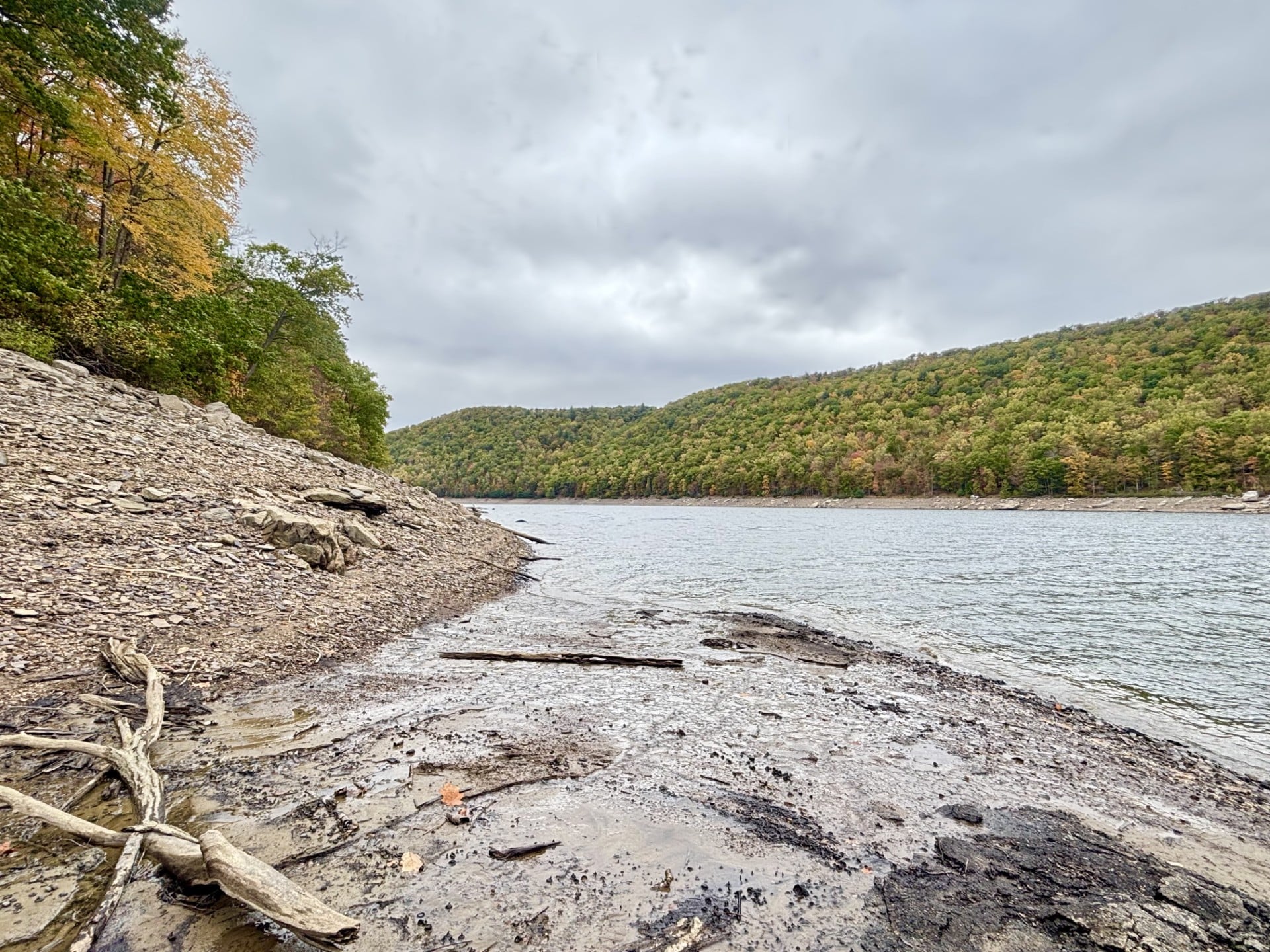
Allegheny Reservoir: Today, the Allegheny River is known as an outdoor recreation paradise. Not many know that under the waters lie lands of the Seneca Peoples as well as non-Natives that were flooded due to the construction of the Kinzua Dam. Warren, Warren County.
Longhouse Scenic Drive: Take to one of Pennsylvania’s National Scenic Byways, once the land of the Seneca Iroquois. Warren/McKean Counties.
Lyman Run State Park: The 595-acre state park with maple and cherry trees and a mix of northern hardwoods surrounding Lyman Run Lake were named after Revolutionary War Major Isaac Lyman. Galeton, Potter County.
Eldred WWII Museum: Renowned WWII museum in Eldred, where a munitions plant was operated during the war. Eldred, McKean County.
Wyalusing Rocks Scenic Overlook: Once used as a signaling point by the Iroquois, this stunning overlook is also known as Prayer Rocks. It marked the intersection of Warriors Path. The view is unrivaled. French Azilum is nearby. Wyalusing, Bradford County.
Destination Freedom- The Underground Railroad Walking Tour: Take an interactive tour exploring the lives of abolitionists and formerly enslaved settlers. Waverly, Lackawanna County.
Wayne County Walk of Honor: Created to honor all service members buried in the county, the Wayne County Walk of Honor consists of an 8-foot center monument bearing military insignias, a map of Wayne County cemeteries, and podiums listing the names and cemeteries of each deceased Veteran. Honesdale, Wayne County.
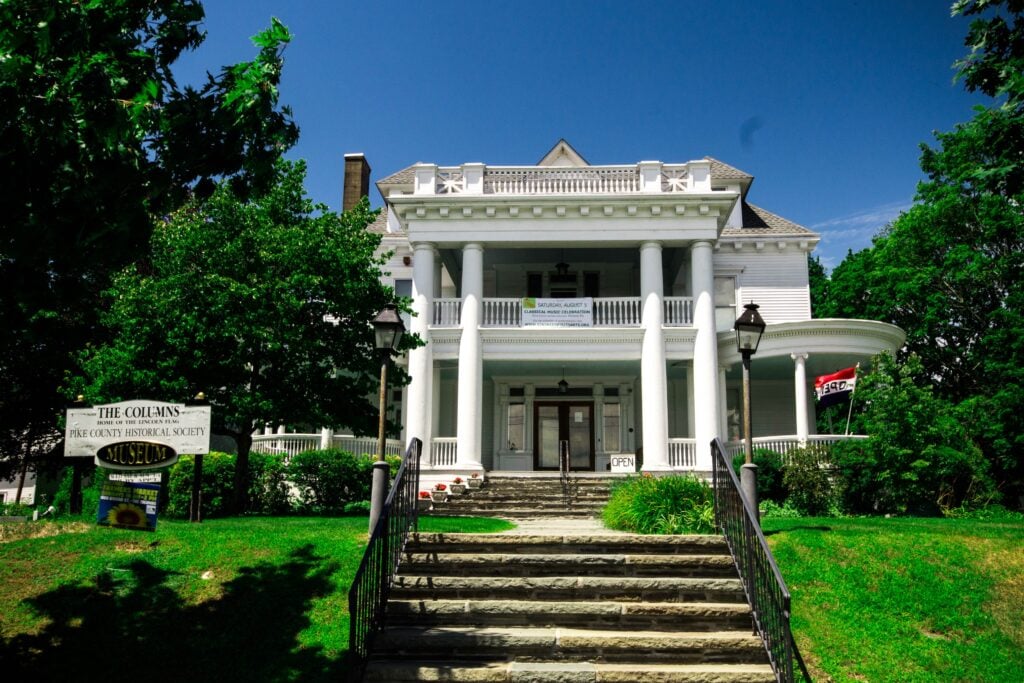
The Columns Museum: Home to the famed Lincoln Flag, a 36-star American flag stained with Abraham Lincoln’s blood and used to cushion his head after he was mortally wounded at Ford’s Theatre, making it one of the most powerful and personal artifacts of the Civil War era. Milford, Pike County.
*Locations are listed West to East and can be found on the map above.
Historic Locations


Discover where America’s stories live on, written right into the landscape.
Perry Monument: Visit Perry Monument, an historic landmark commemorating Commodore Oliver Hazard Perry’s decisive American victory in the Battle of Lake Erie, also symbolizing the lasting peace established between the United States, Britain, and Canada along this international border. Erie, Erie County.
George Washington Memorial Park: After exploring the Fort LeBoeuf Historical Society, visit the memorial at the George Washington Park where Washington’s visit is commemorated. Fort LeBoeuf, Erie County.
General Joseph Warren Park: One of the only monuments to Revolutionary War General Joseph Warren outside of Boston. Warren, Warren County.
Buckaloons Recreation Area: Buckaloons Recreation Area sits on the site of a historic Seneca village at the confluence of the Allegheny River, Brokenstraw Creek, and Irvine Run, where Native Americans once gathered and traveled these waterways. Today, it offers a peaceful setting for camping, boating, fishing, and hiking, highlighted by the Seneca Interpretive Trail that connects visitors to both its rich past and scenic natural beauty. Irvine, Warren County.
Thompson’s Island: An advance party of Brodhead’s expedition of 1779 into the Seneca country had a skirmish here with 30 or 40 Indians, the only fighting which took place in that campaign, and the only Revolutionary battle in northwestern Pennsylvania. Irvine, Warren County.
Burial Site of Chief Cornplanter: Seneca Chief Cornplanter rose to prominence as a war chief allied with the British during the American Revolution before becoming a key diplomat who worked with the United States to secure peace and protect his people’s future. Warren County.
Allegheny Reservoir: Today, the Allegheny River is known as an outdoor recreation paradise. Not many know that under the waters lie lands of the Seneca Peoples as well as non-Natives that were flooded due to the construction of the Kinzua Dam. Read more about the Cornplanter Grant. Warren, Warren County.
Teaoga: This strategic locality between the Chemung and the Susquehanna shows signs of age-old residence by various Indian groups. Graves of an Andaste chief and his followers were unearthed here in 1883-95. Athens, Bradford County.
*Locations are listed West to East and can be found on the map above.
Historical Markers


Follow the road as it reveals the stories written across the land, one marker at a time.
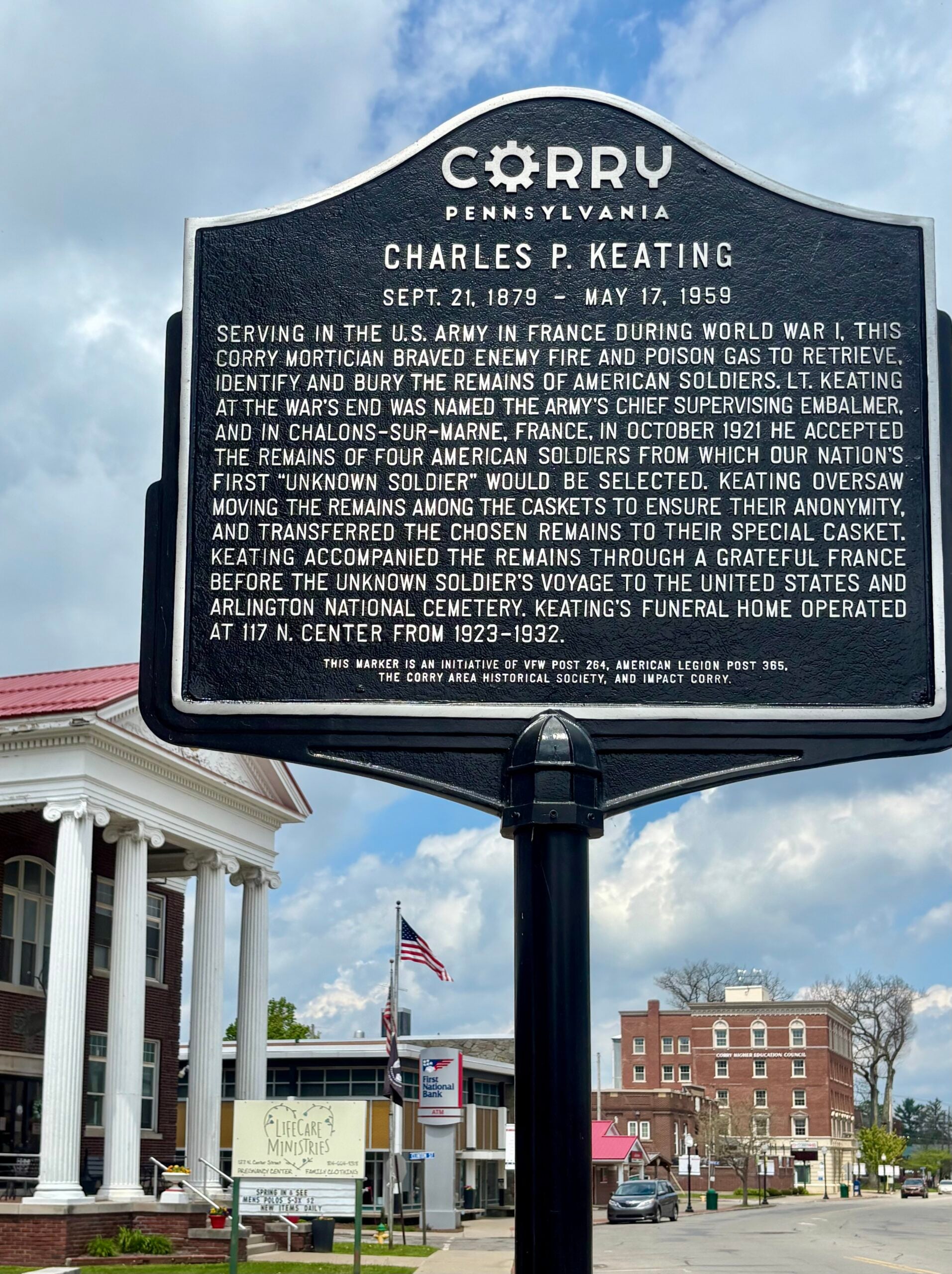
Charles Keating: Serving in the US Army in France during Word War I, this Corry mortician braved enemy fire and poson gas to retrieve, identifty, and bury the remains of American soldiers. Lt. Keating at the War’s end was named the Army’s Chief Supervising Embalmer, and in Chalons-Sur-Marne, France, in October 1921 he accepted the remains of four American soldiers from which our nation’s first “Unknown Soildier” sould be selected. Keating oversaw moving the remains among the caskets to ensure their anonymity, and transferred the chosen remains to their special casket. Before the Unknown Soldier’s voyage to the United States and Arlington National Cemetery. Keating’s funeral home operated at 117 N. Center from 1923-1932. Corry, Erie County.
Buckaloons: A famous Indian village at the junction of Brokenstraw Creek and the Allegheny, visited by Celoron in 1749 and destroyed by Brodhead in 1779. Burial mounds excavated here indicate the antiquity of this site. Irvine, Warren County.
General William Irvine: Surveyed Donation Lands in this area in 1785. Later bought a large tract of land, developed by his son Callender and grandson, Doctor William Irvine. One of the tenant houses of the estate stands opposite. Irvine, Warren County.
Thompson’s Island: An advance party of Brodhead’s expedition of 1779 into the Seneca country had a skirmish here with 30 or 40 Indians, the only fighting which took place in that campaign, and the only Revolutionary battle in northwestern Pennsylvania. Irvine, Warren County.
Celoron’s Expedition: In 1749 a French force under Celoron de Blainville entered the Ohio valley by way of Chautauqua Lake and Conewango Creek. A lead plate was buried at the mouth of the Conewango claiming the area for France. Warren, Warren County.
Seneca Crossing: Native Americans, French explorers, and Revolutionary War soldiers all used this 8-mile cross-country portage to access the upper reaches of the Allegheny River from Conewango Creek. This historic trail provided travelers with a preferable alternative to the arduous 26-mile upriver trip to the heart of the Seneca Nation. Several lower branches of Seneca Crossing converged near here, the trail’s mid-point. The route continued to Kinzua. Warren, Warren County.
Lymansville: The pioneer settlement in this region was made here in 1808 by Major Isaac Lyman, land agent and a Revolutionary officer. The first saw and grist mill, post office, and court were also located here. Coudersport, Potter County.
Teaoga: This strategic locality between the Chemung and the Susquehanna shows signs of age-old residence by various Indian groups. Graves of an Andaste chief and his followers were unearthed here in 1883-95. Athens, Bradford County.
Warriors Path: A great Indian highway from Six Nations country, New York, to the Catawba country in the Carolinas. It made its way through the Allegheny Mountains by following the Susquehanna and Juniata valleys. Wyalusing, Bradford County.
Battle of Lime Hill: Here Apr. 14, 1782, a party led by Sgt. Thos. Baldwin tried to rescue a woman and her children held as Indian captives. In a four-hour battle, three children were saved but the mother was killed. Wyalusing, Bradford County.
Sullivan’s March: (August 1-2, 1779) Gen. John Sullivan’s army camped on the lowland on the opposite side of the river Aug. 1-2, 1779. It was the second camp from Fort Wyoming at Wilkes-Barre en route to Tioga. Falls, Wyoming County.
Sullivan’s March: (August 3, 1779) Gen. John Sullivan’s army on Aug. 3, 1779 camped by the river. Third camp from Fort Wyoming. Part of the Clinton-Sullivan campaign ending in the rout of the Six Nations Iroquois. The Tory-Indian menace on the frontier was eliminated. Tunkhannock, Wyoming County.
Sullivan’s March: (August 4, 1779) Gen. John Sullivan’s army camped on the lowland here Aug. 4, 1779. The fourth encampment between Fort Wyoming and Tioga Point. Meshoppen, Wyoming County.
Sullivan’s March: (August 5-7, 1779) Gen. John Sullivan’s army camped just west Aug. 5-7, 1779, en route to attack the New York Iroquois. A major campaign, destroying 40 villages and ending the Indian-Tory frontier menace. Wyalusing, Bradford County.
Sullivan’s March: (August 8-9, 1779) Gen. John Sullivan’s army camped on the nearby river lowlands Aug. 8-9, 1779 en route to attack the Six Nations Iroquois. Sixth camp between Wyoming and Fort Sullivan. Wyalusing, Bradford County.
Sullivan’s March: (August 9-10, 1779) Gen. John Sullivan’s army camped on the Sheshequin Flats below, Aug. 9-10, 1779. The seventh and last over-night stop on the way to Tioga Point. Milan, Bradford County.
*Locations are listed West to East and can be found on the map above.
Get Social
